
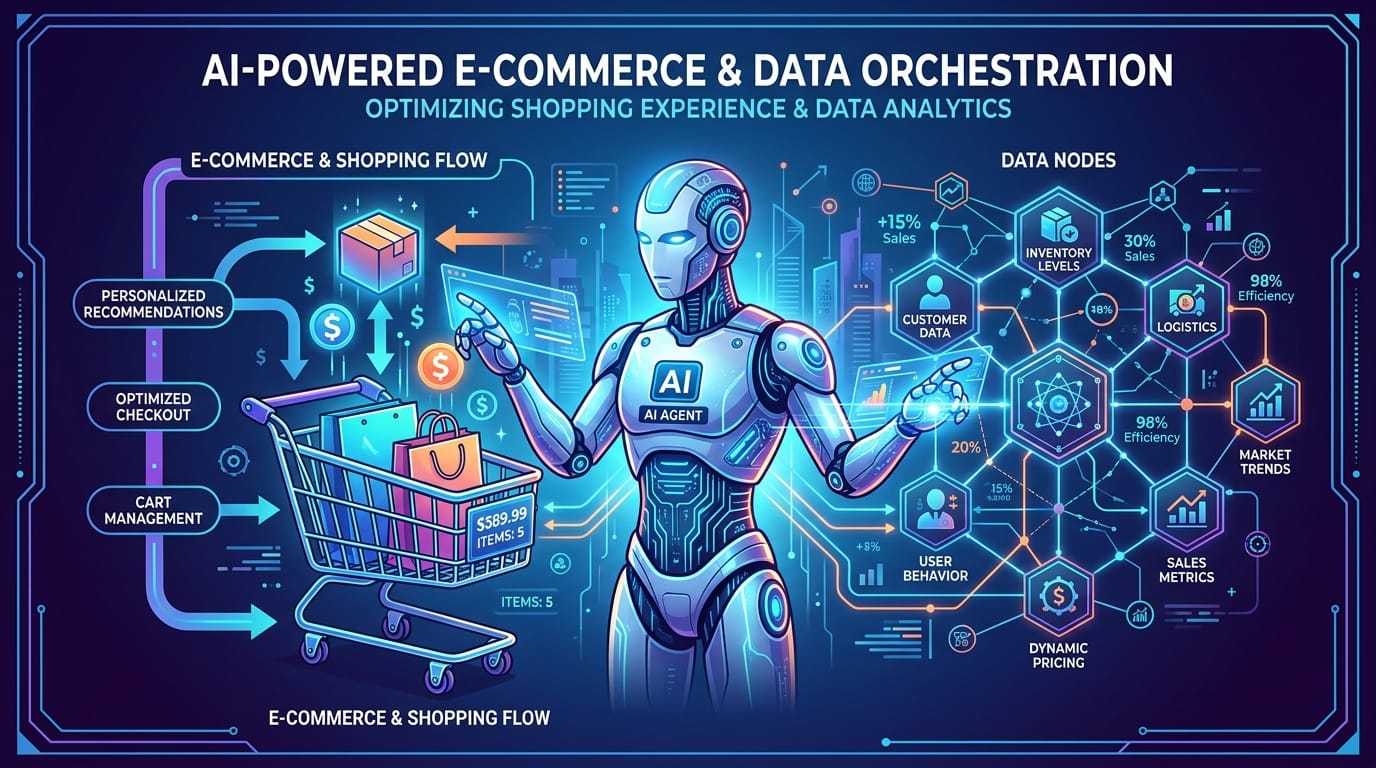
For decades, the goal of digital marketing was to capture human attention. In 2026, that paradigm has shifted. We are entering the era of Agentic Commerce—a world where AI agents, not humans, do the browsing, price negotiating, and purchasing. At StoreVerge, we are analyzing how this transition to “non-human” consumers is forcing a complete overhaul of digital strategy.
1. What is Agentic Commerce?
Agentic Commerce refers to the use of autonomous AI agents—like advanced versions of ChatGPT or specialized shopping bots—that act on behalf of the consumer. Instead of a user spending hours comparing reviews for a new laptop, they simply tell their agent: “Find me the best-valued MacBook Pro for video editing under $2,500 and buy it using my preferred credit card.”
The agent then crawls the web, interacts with APIs, compares real-time inventory, and executes the transaction in seconds. In this model, the “Storefront” as we know it is becoming secondary to the “Data Feed.”
2. The Rise of “Zero-Click” Commerce
One of the most disruptive trends in April 2026 is Zero-Click Commerce. Because AI agents can extract information directly from a site’s backend or structured data, the traditional “customer journey” of clicking through a homepage is disappearing.
For brands, this means that if your product data is not machine-readable, you are effectively invisible to the AI agents that now control a significant portion of market volume. We are seeing a massive shift toward “Feed-First” marketing, where the quality of your API and schema markup is more important than your visual web design.
3. Optimizing for the Non-Human Buyer
To thrive in 2026, businesses must adapt to the “logic” of an AI agent rather than the “emotion” of a human. AI agents don’t care about beautiful lifestyle photography or emotional brand storytelling; they care about:
- Structured Data Accuracy: Precise specs, dimensions, and materials.
- Real-Time Price-per-Unit: Transparent, competitive pricing that agents can compare instantly.
- API Accessibility: How easily an agent can check stock and complete a checkout without “human-only” hurdles.
4. The Privacy Paradox in Autonomous Shopping
As agents handle more sensitive financial and personal data, Cyber-resilience has become the top concern for digital markets this year. At StoreVerge, we’ve noted that the most successful 2026 platforms are those implementing “Confidential Computing” environments, where an agent can verify a user’s identity and funds without exposing the actual credit card details to the retailer.
Conclusion
Agentic Commerce isn’t just a tech buzzword; it’s a 28 trillion-dollar evolution of the global digital economy. As humans move from “shoppers” to “supervisors,” the businesses that provide the most reliable, structured, and accessible data will be the ones that capture the automated market of tomorrow.