

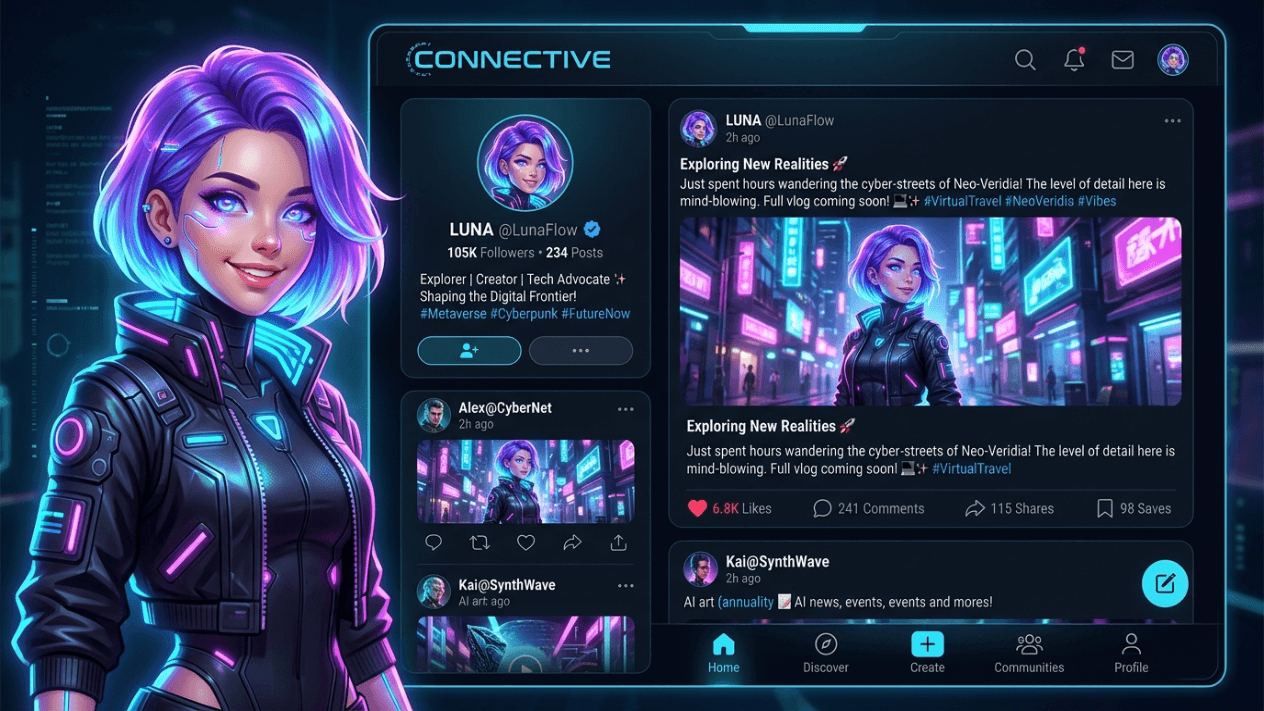
In 2026, the boundary between social media and e-commerce has officially dissolved. We are no longer clicking links to visit stores; we are shopping directly within our feeds. At StoreVerge, we are tracking the most disruptive force in this transition: the rise of Virtual Influencers and the industrialization of the AI Creator Economy.
1. The Virtual Influencer Explosion
The virtual influencer market has surged to an estimated $15.9 billion this year. These digital personas—ranging from hyper-realistic AI avatars to stylized non-human characters—are achieving engagement rates up to 3x higher than their human counterparts.
Why brands are switching to Virtual Creators:
- 24/7 Availability: They can “live stream” products across multiple time zones simultaneously without fatigue.
- Narrative Control: Brands have 100% control over messaging, reducing the risk of PR scandals.
- Scalability: A single digital asset can be customized for different languages and cultural markets in seconds.
2. From Search to Algorithmic Discovery
The biggest shift in April 2026 is the death of the “Keyword Search” for products. Instead, social commerce has moved to an Era of Discovery. Algorithms now present products based on predictive behavior before a user even knows they want them.
On platforms like TikTok and Instagram, Shoppable Video has become the default sales channel. According to recent market data, viewers are now 64% more likely to purchase after watching a short-form video where the checkout process is integrated directly into the player.
3. The Live Shopping Revolution
Live-stream shopping, once a trend exclusive to Asia, has fully consolidated in Western markets. In 2026, live selling events are driving 30% higher conversion rates than standard product pages. Virtual influencers are at the forefront of this, using real-time generative AI to answer customer questions, demonstrate product features, and offer “instant” limited-time discounts that create intense purchase urgency.
4. Addressing the Authenticity Gap
As the market becomes crowded with “AI Slop” (low-quality automated content), StoreVerge has noted a clear trend: consumers are gravitating toward Valuable Authenticity. While the influencer may be virtual, the value they provide—through storytelling, high-quality production, and genuine community interaction—must be real.
The most successful brands in 2026 are those that balance virtual personas with human-centered strategy, ensuring that the digital storefront still feels like a community.
Conclusion
Social commerce is no longer a marketing tactic; it is the essential infrastructure of modern retail. As we move further into 2026, the businesses that successfully integrate AI creators and shoppable feeds will be the ones that capture the next generation of global consumers.